




THE DEFINITION OF BORED PILE
A bored pile is a type of deep foundation created by drilling into the ground to form a hole, which is then filled with concrete. Bored piles are used to support the loads of buildings and are often employed in construction in areas with unstable soil or where foundation depth needs to reach stronger soil layers.
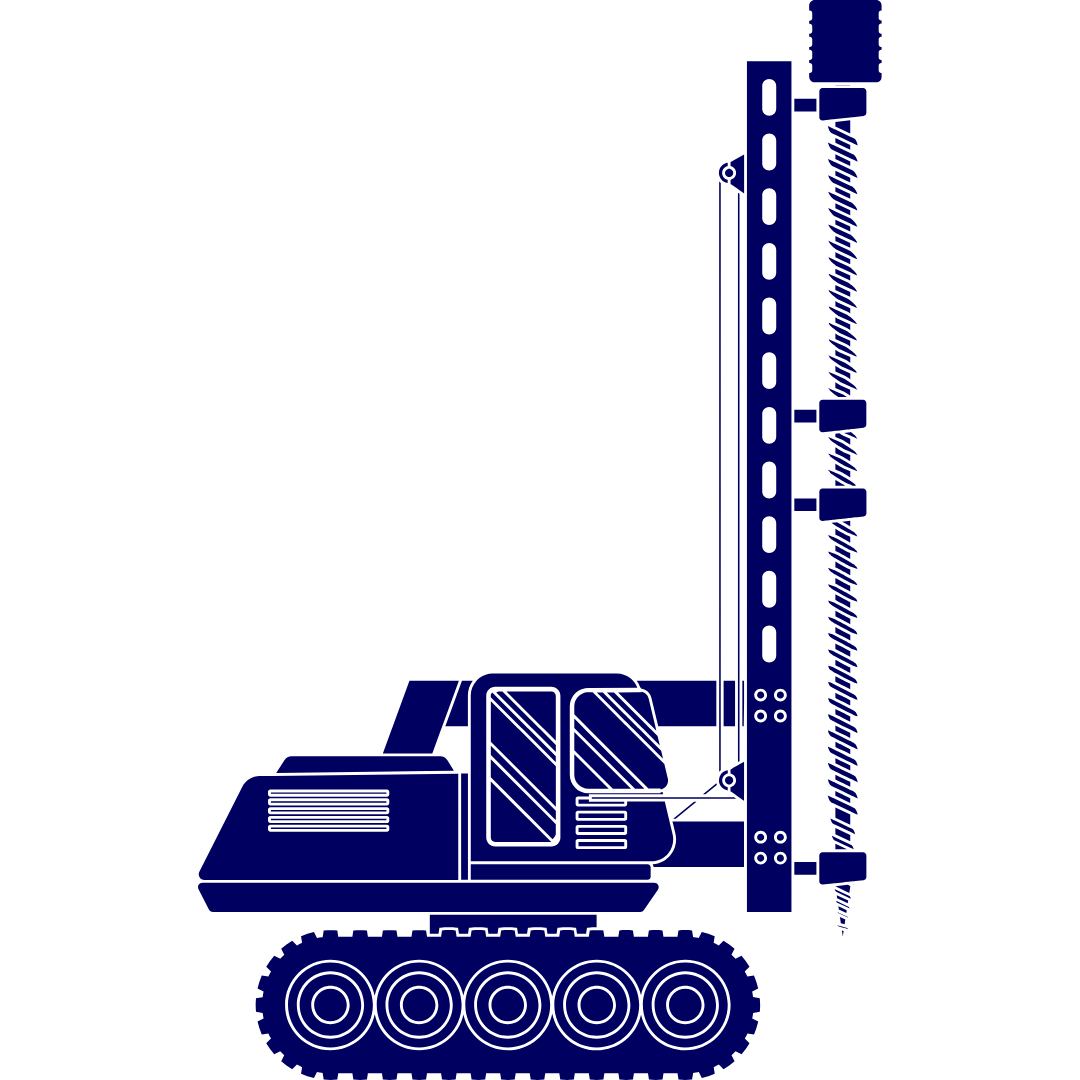
WORK METHOD
1. Area Clearance and Drilling Rig Setup
Prepare the working platform by clearing the area, fixing pegs for the borehole position, and setting the drilling rig in the designated position for the bored pile.
2. Pre-Boring
Conduct the pre-boring using a soil auger to establish the initial borehole.
THE ADVANTAGES OF BORED PILE
Improved Stability
Casing prevents borehole collapse in soft or water-logged soils, which improves drilling safety.
Soil Sampling Capability
Allows engineers to gather valuable information about soil conditions, which is crucial for foundation design.
Minimized Risk of Damage
Minimizes potential harm to nearby environments and existing structures, lowering associated risks.
Versatility
Suitable for a wide range of projects, from high-rise buildings to large infrastructure like bridges and tunnels.
APPLICATION BORED PILE
High-Rise Building Construction
Ensures stability and strength of foundations for large structures.
Transportation Infrastructure
Used in the construction of bridges, highways, and railways, particularly in challenging soil conditions.
Waterfront Development Projects
Highly useful in projects near or under water, where soil stability is often a concern.
Restoration and Strengthening of Existing Structures
Can be used to reinforce the foundations of existing buildings that are experiencing damage or settlement.