




THE DEFINITION OF SECANT PILE
A secant pile is a type of retaining wall or foundation element formed by overlapping concrete piles. These piles are constructed by drilling and pouring concrete in a sequence that allows them to intersect, creating a continuous wall with enhanced structural integrity. Secant piles are typically used to provide lateral support, retain soil, and prevent groundwater intrusion. They can be either unreinforced or reinforced with steel, depending on the specific engineering requirements. This method is often employed in excavation support, tunneling, and other applications where stability is critical.
WORK METHOD

1. Area Clearance and Drilling Rig Setup
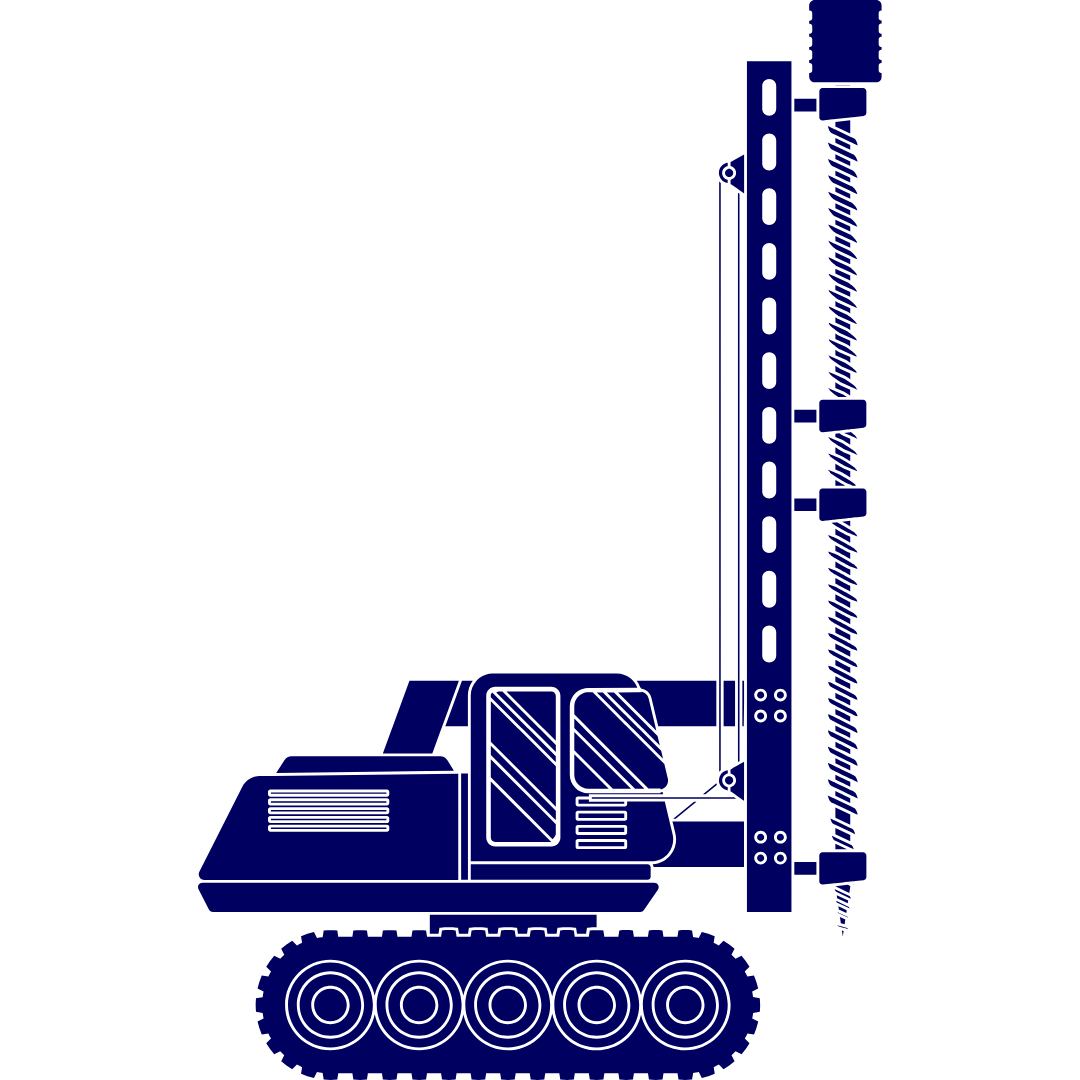
Prepare the working platform by clearing the area, fixing pegs for the borehole position, and setting the drilling rig in the designated position for the bored pile.
2. Drilling for Primary Piles
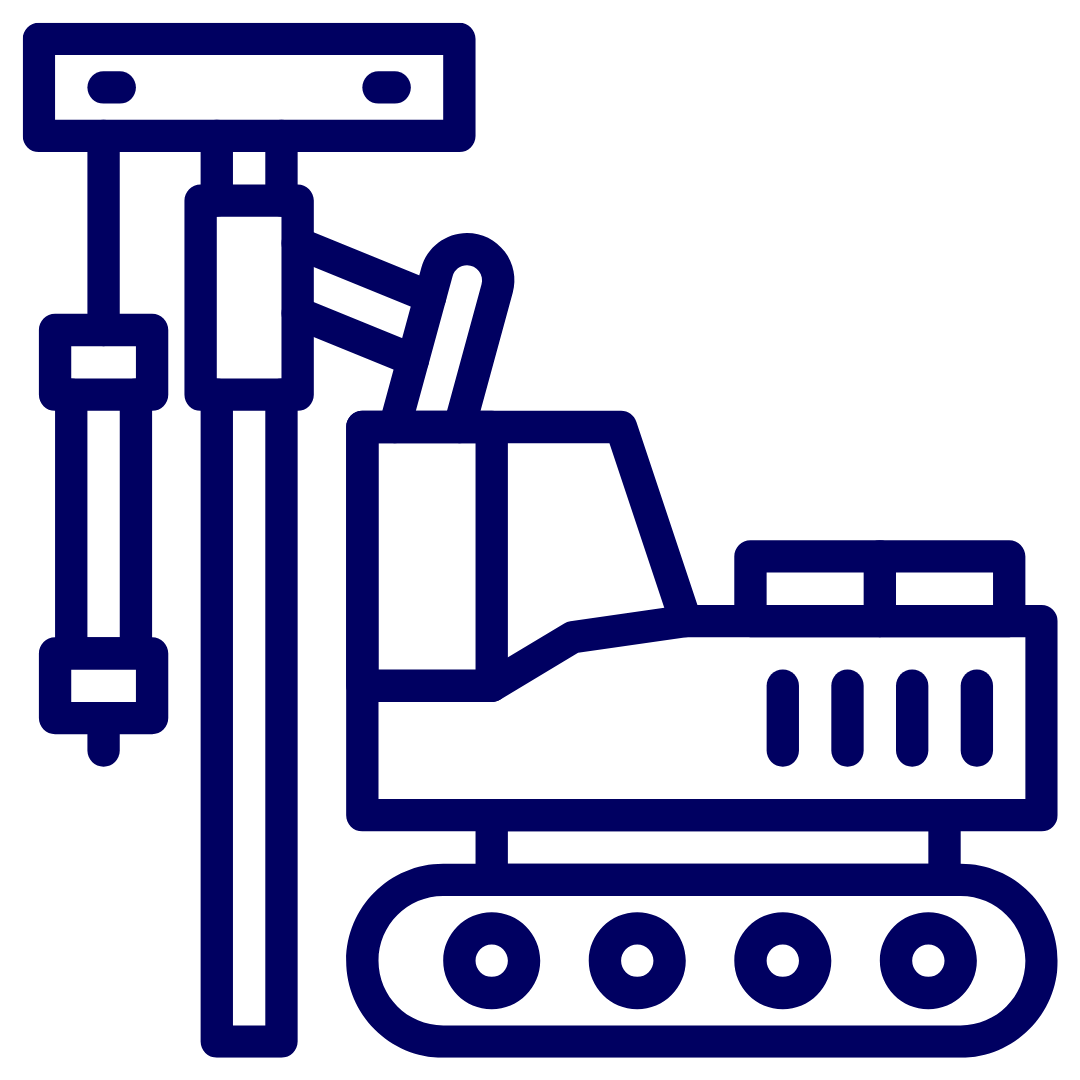
Use a rotary drill to create holes for the first row of secant piles. The diameter and depth of the holes should match the project specifications. If necessary, a polymer slurry can be used to stabilize the borehole during the drilling process.

3. Concrete Pouring for Primary Piles
Once the holes are drilled, pour concrete into them to form the primary secant piles.

4. Curing
Allow the concrete to cure for the specified time to achieve the desired strength.
5. Drilling for Secondary Piles
After the primary piles have cured, drill holes for the secondary piles that will intersect with the primary piles. If necessary, a polymer slurry can be used to stabilize the borehole during the drilling process.

6. Reinforcement Placement
Before pouring concrete into the secondary pile holes, insert reinforcement steel into the holes. Ensure the placement of the reinforcement complies with the design specifications.
7. Concrete Pouring for Secondary Piles
Once the reinforcement is properly positioned, pour concrete into the secondary pile holes, ensuring it is evenly distributed and fills all gaps.
8. Curing and Backfilling
Allow the secondary piles to cure. After the secant piles are set, backfill any necessary areas.
THE ADVANTAGES OF SECANT PILE
High Lateral Support
Secant piles provide excellent resistance against lateral earth pressures, making them effective for retaining walls.
Continuous Wall Formation
The overlapping design creates a continuous wall, which helps in preventing soil and water infiltration.
Versatile Applications
Suitable for various applications, including excavation support, tunneling, and foundation systems.
Reduced Ground Movement
The method helps to minimize ground displacement during installation, reducing the risk of damage to nearby structures.
APPLICATION SECANT PILE
Excavation Support
Commonly used to support deep excavations in urban environments, providing stability and preventing collapse.
Retaining Walls
Employed in constructing retaining walls to stabilize slopes and prevent soil erosion.
Groundwater Control
Effective in controlling groundwater levels during construction, especially in areas prone to flooding or high water tables.
Tunneling Projects
Used as part of the support system in tunneling operations to maintain the integrity of the surrounding soil.
Foundation Systems
Applied in foundation systems for buildings and structures, particularly in challenging soil conditions where traditional foundations may not suffice.
Slope Stabilization
Utilized in stabilizing slopes in areas vulnerable to landslides or erosion.